
Quick answer:
Most women feel significantly better by weeks 2 to 3 and are able to do most normal activities around the 6-week postpartum checkup. Full internal healing, including the uterus and deeper tissue layers, can take several months.
A realistic, mom-to-mom guide to healing after cesarean birth, from the hospital room to your six-week checkup and beyond.
Introduction: Recovering From Major Surgery While Caring for a Newborn
A cesarean birth is a major abdominal surgery. Your surgeon cuts through skin, fat, muscle tissue, and the uterus to bring your baby into the world, and then you go home and are expected to feed, soothe, and love a newborn around the clock.
If you are searching for a C-section recovery timeline, you are probably asking the questions every cesarean mom asks. How long will this hurt? When can I walk normally, drive, or pick up my toddler? What is normal, and what is a warning sign? This guide walks you through C-section recovery week by week, with practical tips for pain, movement, sleep, and scar care. Every body heals at its own pace, so treat the timeline below as a general guide rather than a deadline. Your doctor or midwife always has the final word on what is safe for you.
How Long Does C-Section Recovery Take?
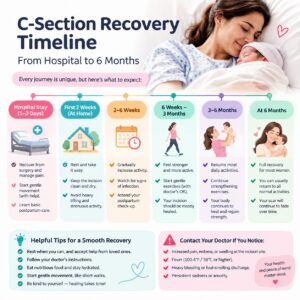
The short version looks like this:
- Hospital stay: usually 2 to 4 days
- Early recovery: the first 2 weeks are the hardest.
- Major improvement: around weeks 3 to 4
- Typical clearance for normal activity: about 6 to 8 weeks.
- Complete healing: up to 6 months or longer, especially for scar sensation and core strength
Recovery is usually slower if you had an emergency C-section after a long labor, have other children to care for, had complications, or had little help at home. None of that means you are doing it wrong.
Day 0 to Day 4: The Hospital Stay
What is happening in your body
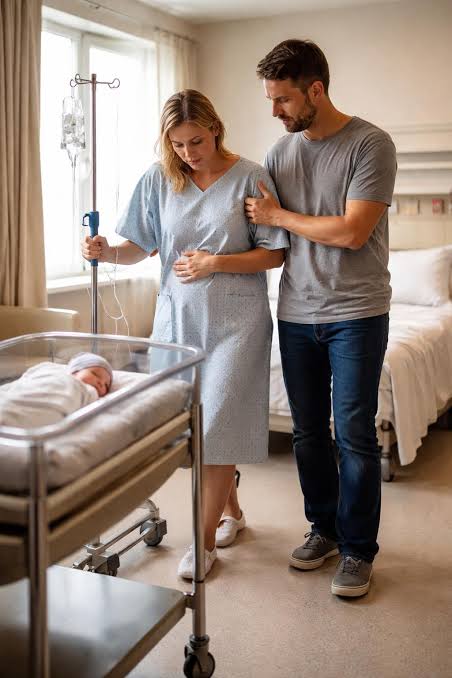
You will likely have a catheter, an IV, and compression devices on your legs for the first day. Nurses will check your incision, your bleeding, and your pain level often.
What to expect
- Pain and soreness that is manageable with prescribed or recommended medication
- Nausea, shakiness, or itching from anesthesia, which usually fades quickly
- Gas pain, which can be surprisingly sharp, sometimes in the shoulders
- Vaginal bleeding (lochia), even though you did not deliver vaginally
- Afterpains, which are cramps that occur when your uterus shrinks back down, especially while breastfeeding
Tips for the hospital
- Get moving early. Nurses will encourage you to sit up and walk within about a day. Short, gentle walks help with gas, circulation, and lowering the risk of blood clots.
- Stay ahead of the pain. Take medication on schedule rather than waiting until pain is severe.
- Hold a pillow against your incision when you cough, laugh, sneeze, or stand up. This is called splinting, and it makes a real difference.
- Ask for help with baby care. Request skin-to-skin, latch support, and night nurse help if your hospital offers it.
Week 1: Survival Mode
The first week at home is often the toughest part of the entire C-section recovery. You are tired, sore, and learning your baby all at once.
What is normal
- Incision tenderness, tightness, and bruising.
- Fatigue that feels heavier than you expected.
- Bleeding that is heavy at first and gradually lightens.
- Gas and constipation.
- Mood swings and tears (the “baby blues” often peak around days 3 to 5)
What helps?
- Pain management: Follow your doctor’s instructions on medication. Many providers recommend a schedule of over-the-counter pain relievers, sometimes combined with a prescription. Do not combine or change medications without checking.
- Stool softeners: Constipation plus an abdominal incision is no one’s idea of fun. Ask your provider about a stool softener, and drink plenty of water.
- A pillow fortress: Keep pillows within reach for splinting and for propping the baby while nursing.
- High-waisted, soft underwear that sits above your incision, not on it.
- Setting up stations: Keep diapers, wipes, water, snacks, and burp cloths on every floor you use so you are not constantly bending and walking.
How to get out of bed after a C-section?
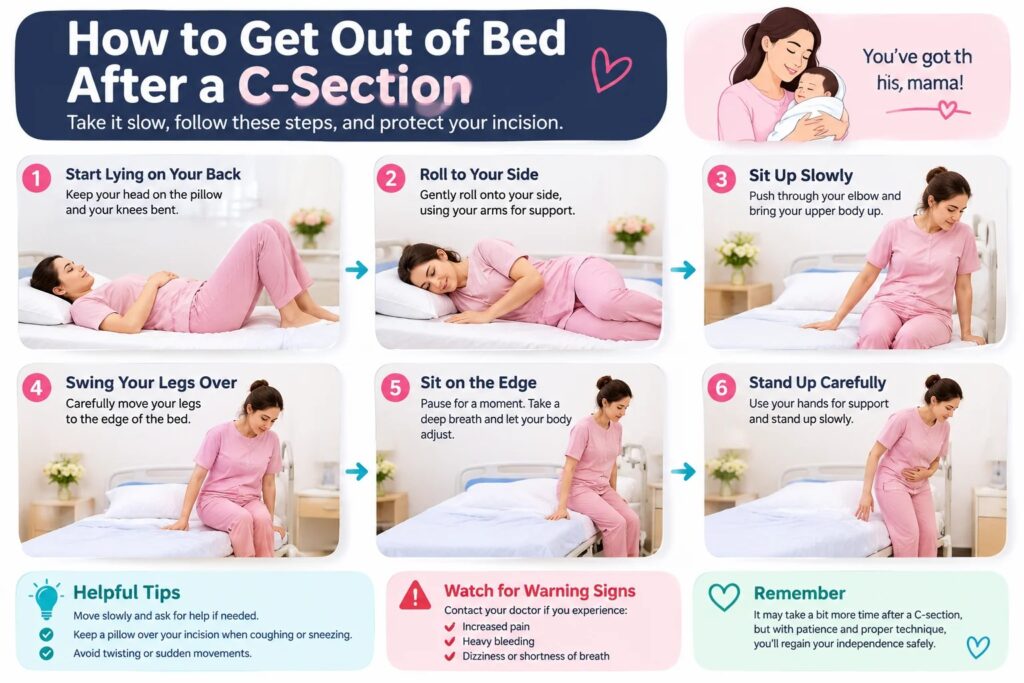
- Bend your knees and roll onto your side.
- Use your arms to push yourself up as your legs swing off the bed.
- Keep your core relaxed and avoid sitting straight up like a sit-up.
- Stand slowly, hold a pillow to your belly if it helps, and pause before walking.
Incision care basics
- Keep the area clean and dry, following your hospital’s instructions.
- Pat dry after showering. Do not scrub.
- Do not soak in a bath or pool until your provider says it is okay.
- If you have surgical glue, strips, or staples, follow your care team’s guidance on when they come off or are removed.
Week 2: Small Wins and Common Setbacks
By week 2 many moms notice a shift. The sharpest pain eases, but it is also when people overdo it and have a bad day.
What is normal
- Less pain overall, but soreness at the end of the day
- Itching, numbness, or tingling around the incision as nerves heal
- Lighter bleeding that may change color
- Continued tiredness, especially with night feedings
What to focus on
- Walk a little more each day. Short, frequent walks beat one long outing.
- Keep lifting light. The common guidance is to lift nothing heavier than your baby until your provider clears you.
- Rest when the baby rests, even if that just means lying down with your feet up.
- Accept help. Let friends and family handle meals, laundry, dishes, and older kids.
Many doctors advise waiting to drive until you are off prescription pain medication and can brake suddenly without pain or hesitation. For many women that is around 2 weeks or later, but ask your provider.
Weeks 3 to 4: Turning the Corner
This is when many moms say they finally feel like themselves again, at least a little.
What is normal
- Noticeably less pain with daily movement.
- Better energy, with ups and downs.
- The incision looks flatter and less red.
- Possible tugging or pulling sensations when you stretch or twist.
What to do
- Continue gentle daily walks and slowly lengthen them.
- Keep avoiding heavy lifting, vacuuming, and strenuous chores.
- Pay attention to posture while feeding. Bring the baby up to you with pillows instead of hunching over.
- Ask your provider when to begin gentle core and pelvic floor exercises.
A note on the “C-section shelf”
Many moms notice a soft overhang of skin and tissue above the scar. It is very common, often changes over the first months, and is not a sign that something went wrong. Be patient with your body.
Weeks 5 to 6: Getting Ready for Your Checkup
Your postpartum visit, often around 6 weeks, is when your provider checks your incision, your bleeding, your mood, and your overall healing. Some providers also schedule an earlier check in the first two weeks.
Questions to ask at your checkup
- Am I healing well internally and externally?
- When can I resume exercise, and what kind?
- When is it safe to have sex and use contraception?
- Can I start scar massage or use silicone sheets?
- How do I know if my pelvic floor or abdominal muscles need physical therapy?
- Is my mood and anxiety level in a healthy range?
Do not skip the emotional check. Postpartum depression and anxiety can affect any mom. If you feel hopeless, panicked, or unable to enjoy your baby, tell your provider. You deserve support.
Weeks 6 to 12: Easing Back Into Life
Most women are cleared for normal activities around this stage, but cleared does not mean fully healed.
What is normal
- Occasional pulling or twinges at the scar
- Numbness or a strange “buzzing” sensation around the incision
- Fatigue, especially with a baby who is not sleeping through the night
- A core that still feels weak or disconnected
How to return to exercise safely
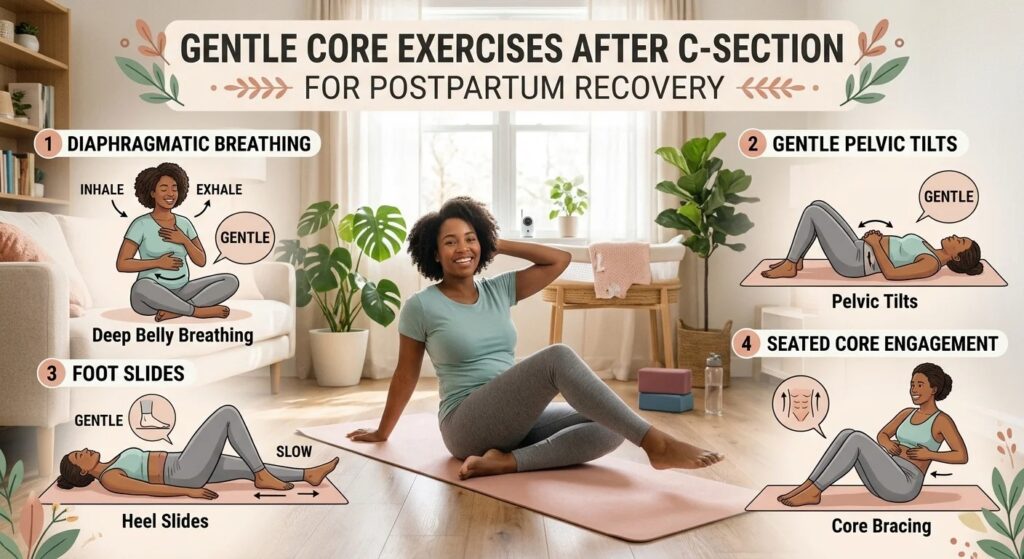
- Start with walking, gentle stretching, and pelvic floor and deep core work.
- Add low-impact movement such as swimming or stationary biking if your provider approves.
- Avoid crunches, heavy lifting, and high-impact workouts until you have rebuilt your core.
- Consider seeing a pelvic floor physical therapist who understands cesarean recovery.
If you notice a bulge or doming down the middle of your belly when you sit up, or ongoing back pain or leaking, ask about diastasis recti and pelvic floor support.
Months 3 to 6 and Beyond: The Long Tail of Healing
The scar fades and flattens gradually, often over a year. Some numbness may stay permanently, and many moms notice sensation slowly returning over many months.
- Scar care: With your provider’s approval and once the incision is fully healed, many people use gentle scar massage or silicone sheets or gel to help with tightness and appearance.
- Sun protection: Cover or use sunscreen on the scar to keep it from darkening.
- Core strength: Rebuild gradually. Strength training and functional core work usually feel much better after a period of rehab.
- Mental health: If you are carrying disappointment or grief about the birth, it is valid. Talking with a therapist or a support group can help.
C-Section Recovery Products Worth Considering
You do not need everything. These items are the ones moms most often mention as helpful:
- High-waisted underwear or soft postpartum briefs that do not rub the incision
- Abdominal binder or belly band (check with your provider first)
- Silicone scar sheets or gel, once approved for use
- Stool softener and a large water bottle
- Nursing pillow or firm pillows to protect your incision while feeding
- Slip-on shoes so you do not have to bend over
- Loose, soft dresses or high-waisted joggers
- Peri bottle, pads, and nipple care items for general postpartum comfort
- Heating pad (use as directed and avoid placing it directly on the incision)
Warning Signs: When to Call Your Doctor
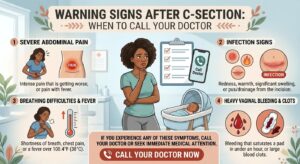
Trust your instincts. Contact your provider promptly, or seek urgent care, if you notice any of the following:
- Fever of 100.4°F (38°C) or higher
- Redness, swelling, warmth, or pus at the incision
- The incision opening or separating
- A foul-smelling discharge
- Heavy bleeding, such as soaking a pad in an hour, or passing large clots
- Severe or worsening pain that medication does not relieve
- Pain, swelling, or warmth in one calf or leg
- Chest pain or shortness of breath, which is an emergency
- Burning with urination or trouble urinating
- Thoughts of harming yourself or your baby, or feeling overwhelmed and hopeless
Never feel silly for calling. It is always better to check.
10 Practical Tips for a Smoother C-Section Recovery
- Prepare before birth. Stock your recovery stations, freeze meals, and line up help.
- Say yes to help. Make specific requests, such as “Could you bring dinner Tuesday?”
- Take pain medication on time. Do not try to be a hero.
- Walk daily, even for a few minutes.
- Splint your incision when you cough, laugh, or sneeze.
- Keep what you need within arm’s reach.
- Protect your sleep by sharing night duty when possible.
- Eat protein, fiber, and plenty of fluids to support healing and digestion.
- Be gentle with your mind. Recovery is physical and emotional.
- Go to your appointments, and ask questions.
Final Thoughts: You Are Healing, and That Is Enough
A C-section recovery asks a lot of you. You are healing from surgery, learning a tiny person, and running on little sleep. Progress will not be linear, and some days will be harder than others. Be patient with your body, protect your rest, accept help, and speak up when something feels off. However your baby arrived, you are a real mom, and your recovery deserves the same care you are giving your newborn.
Medical disclaimer: This article is for general information only and is not medical advice. Always follow the guidance of your own doctor or midwife about your recovery.
Call to action ideas: Download the free C-section recovery checklist. Subscribe for more postpartum guides. Share your own recovery tips in the comments.
Frequently Asked Questions
How long does it take to recover from a C-section?
Most women feel much better by 2 to 4 weeks and are cleared for normal activity around 6 to 8 weeks. Deeper healing and scar changes can continue for several months.
When can I drive after a C-section?
Many providers say you can drive once you are off prescription pain medication and can turn, brake, and react quickly without pain. For many women this is around 2 weeks or later. Check with your provider.
When can I lift my toddler after a C-section?
Usually not until your provider clears you, often around 6 weeks. Until then, have your toddler climb into your lap while you are seated.
Is it normal to feel numb around my C-section scar?
Yes. Numbness, tingling, or itching is common as nerves heal, and it can last for months. Mention anything that worries you at your checkup.
When can I start exercising after a C-section?
Gentle walking is usually encouraged early on. Most women are cleared for structured exercise around 6 to 8 weeks, but you should ease back in gradually and rebuild core strength.
When can I start scar massage?
Typically after the incision is fully closed and your provider approves, often around 6 weeks or later.
Can I have a vaginal birth after a C-section?
How long does it take to recover from a C-section?
Most women feel much better by 2 to 4 weeks and are cleared for normal activity around 6 to 8 weeks. Deeper healing and scar changes can continue for several months.
When can I drive after a C-section?
Many providers say you can drive once you are off prescription pain medication and can turn, brake, and react quickly without pain. For many women this is around 2 weeks or later. Check with your provider.
When can I lift my toddler after a C-section?
Usually not until your provider clears you, often around 6 weeks. Until then, have your toddler climb into your lap while you are seated.
Is it normal to feel numb around my C-section scar?
Yes. Numbness, tingling, or itching is common as nerves heal, and it can last for months. Mention anything that worries you at your checkup.
When can I start exercising after a C-section?
Gentle walking is usually encouraged early on. Most women are cleared for structured exercise around 6 to 8 weeks, but you should ease back in gradually and rebuild core strength.
When can I start scar massage?
Typically after the incision is fully closed and your provider approves, often around 6 weeks or later.
Disclaimer
We are an educational platform, not professional counselors, therapists, or medical experts. The content on this blog is for informational purposes only and should not be taken as professional parenting, medical, psychological, or legal advice. Every family and child is unique, and what works for one may not work for another. Always seek guidance from qualified professionals before making decisions about your family’s health, education, or well-being. I share my personal experiences here purely for entertainment purposes, so please do not take them too seriously or apply them to yourself without proper consideration.