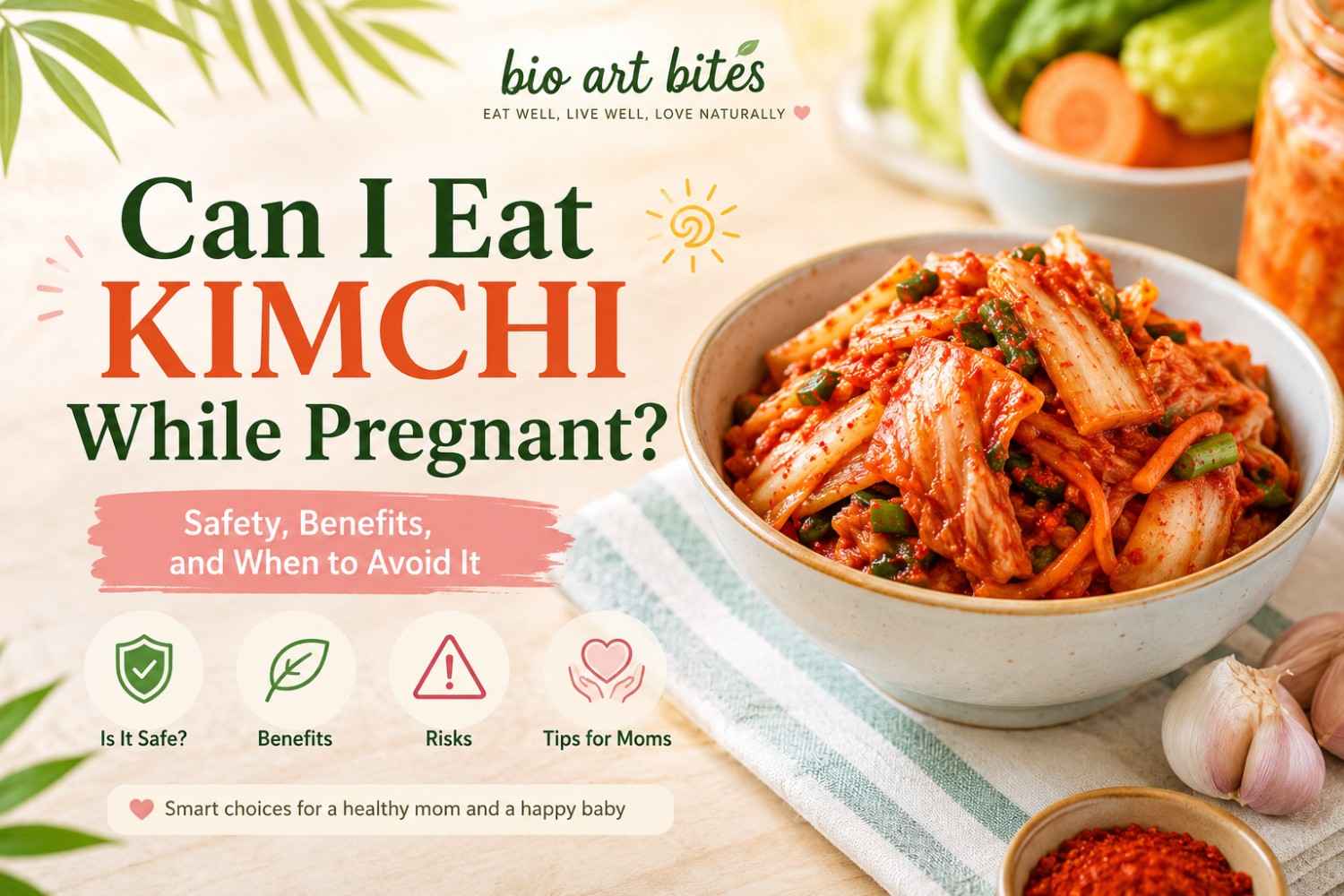
If you are pregnant and craving kimchi, you may be wondering whether it is safe to eat or if fermented foods should be avoided during pregnancy. Yes, many pregnant women can eat kimchi, but it depends on how the kimchi was prepared, stored, and served. Store-bought kimchi from a trusted brand is usually a safer choice than homemade kimchi if you are unsure about the hygiene, fermentation process, or storage conditions. Kimchi can offer flavor, probiotics, and vegetables, but pregnancy also requires extra care with refrigerated, ready-to-eat foods. The biggest concern is not kimchi itself, but the possibility of contamination, improper storage, high sodium content, or stomach discomfort from spice and fermentation.
Is Kimchi Safe During Pregnancy?
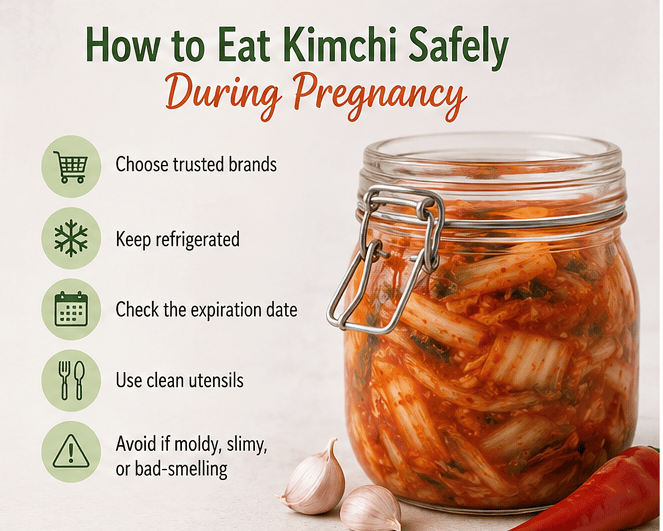
Kimchi can be safe during pregnancy when it is:
- Made by a trusted brand or prepared hygienically
- Properly refrigerated
- Eaten before the expiration date
- Not left out at room temperature
- Free from mold, unusual smell, or slimy texture
- Served with clean utensils
Kimchi is a fermented cabbage dish that often contains ingredients like napa cabbage, radish, garlic, ginger, chili pepper, and salt. Because it is fermented and often eaten cold, pregnant women should pay close attention to food safety. If the kimchi has been stored correctly and looks, smells, and tastes normal, a small serving with a meal is generally acceptable for many pregnant women. However, if you have a high-risk pregnancy, a weakened immune system, severe digestive issues, or have been advised to avoid certain foods, ask your doctor before eating it.
Also Read: Can I Eat Raisins While Pregnant?
Store-Bought Kimchi vs Homemade Kimchi During Pregnancy
Store-bought kimchi from a trusted brand may be a safer option during pregnancy because commercial production, packaging, labeling, and refrigeration are usually more controlled than homemade preparation. Still, it should be kept refrigerated, eaten before the expiration date, and discarded if it looks or smells spoiled. Homemade kimchi may still be safe, but only if it was prepared with clean equipment, fresh ingredients, proper fermentation, and safe refrigeration.
| Type of Kimchi | Pregnancy Safety Level | What to Know |
|---|---|---|
| Store-bought refrigerated kimchi | Usually safer | Choose trusted brands, check the expiry date, and keep it cold. |
| Homemade kimchi | Use caution | Only eat it if you trust the preparation and storage process. |
| Kimchi left at room temperature | Avoid | Bacteria can grow when food is not stored safely. |
| Moldy or bad-smelling kimchi | Avoid | Do not taste it to “check.” Throw it away. |
| Cooked kimchi | Often lower risk | Heating may reduce some food safety concerns, but it may also reduce probiotic benefits. |
Can Pregnant Women Eat Unpasteurized Kimchi?
Some kimchi contains live cultures because it is fermented and may not be pasteurized. This is one reason pregnant women often feel unsure about eating it. Unpasteurized kimchi does not automatically mean it is unsafe, but pregnant women should be more cautious with unpasteurized, homemade, or poorly stored fermented foods because safety depends on hygiene, fermentation control, refrigeration, and handling. The safety depends on the brand, ingredients, cleanliness, fermentation method, refrigeration, and how long it has been stored. If you are worried, you can choose pasteurized kimchi or cooked kimchi. Cooking kimchi may reduce some microbial risks, but it can also reduce the live probiotic benefit.
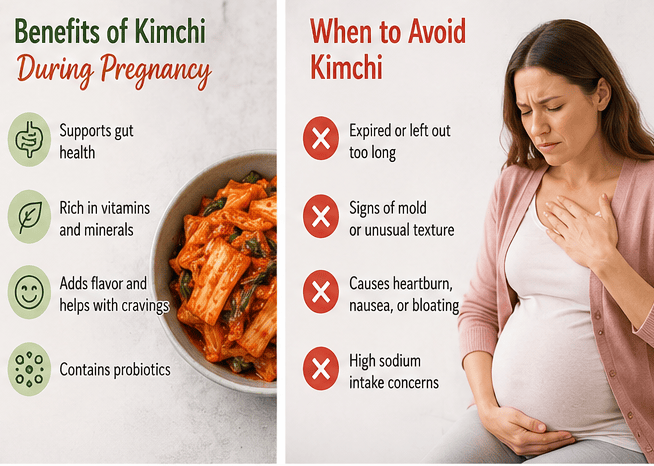
Benefits of Eating Kimchi During Pregnancy
Kimchi may offer some benefits when eaten safely and in moderation.
1. It May Support Gut Health
Kimchi is a fermented food, and fermented foods may contain beneficial bacteria. Some people eat kimchi to support digestion and gut health. During pregnancy, digestion can slow down, and many women deal with bloating or constipation. Kimchi may be helpful for some women, but it should not be treated as a medical solution for pregnancy constipation.
2. It Adds Flavor When Food Feels Boring
Pregnancy can change your appetite. Some foods may suddenly taste bland, while sour, salty, or spicy foods may feel more satisfying. Kimchi can add strong flavor to rice bowls, eggs, soups, noodles, sandwiches, and cooked meals. This can help if you are struggling with food aversions.
3. It Contains Vegetables
Kimchi is commonly made with cabbage, radish, scallions, garlic, and ginger. These ingredients can add variety to your meals. However, kimchi should not replace fresh vegetables, fruits, protein, whole grains, and other pregnancy-friendly foods.
4. It May Help Satisfy Sour or Spicy Cravings
Many pregnant women crave sour, salty, spicy, or tangy foods. Kimchi fits that craving pattern well. Eating a small amount may help satisfy the craving without overeating salty snacks.
Also Read: Can I Eat Burrata While Pregnant? A Complete Guide for Expecting Mothers
Risks of Eating Kimchi While Pregnant
Kimchi is not automatically dangerous, but there are a few risks to understand.
1. Foodborne Illness Risk
Pregnancy makes food safety more important. Refrigerated ready-to-eat foods can become risky if they are contaminated or stored improperly. Because kimchi is often eaten cold, you should be careful with how it is handled. Always use clean utensils, keep the jar refrigerated, and avoid eating from a jar that has been open for too long.
2. High Sodium Content
Kimchi can be high in salt. A small serving is usually fine for many people, but large portions may add too much sodium to your diet. Be extra cautious if you have high blood pressure, swelling, preeclampsia risk, or your doctor has recommended reducing sodium.
3. Heartburn or Acid Reflux
Kimchi is spicy, acidic, and fermented. For some pregnant women, this can trigger heartburn, acid reflux, nausea, or stomach discomfort. If kimchi makes your symptoms worse, reduce the portion size or avoid it for a while.
4. Bloating or Gas
Fermented foods can cause bloating or gas in some people. Pregnancy already slows digestion, so kimchi may feel uncomfortable even if it is safe. Start with a small amount and see how your body responds.
Also Read: Can I Eat Chia Seeds While Pregnant?
How Much Kimchi Can You Eat While Pregnant?
A small side serving is usually enough. You do not need a large amount to enjoy the flavor.
A practical portion could be:
- 1 to 2 tablespoons with a meal
- A small side dish with rice or soup
- A little cooked into a warm dish
If you notice heartburn, nausea, bloating, diarrhea, or stomach pain after eating kimchi, stop eating it and speak with your healthcare provider if symptoms continue.
When Should You Avoid Kimchi During Pregnancy?
Avoid kimchi while pregnant if:
- The jar is expired
- It was left out at room temperature
- It smells rotten or unusual
- You see mold
- The texture is slimy in an unusual way
- The container is bulging or leaking
- You do not know how homemade kimchi was prepared
- It causes strong heartburn, nausea, diarrhea, or stomach pain
- Your doctor has told you to avoid high-sodium or fermented foods
When in doubt, do not eat it.
What If I Already Ate Kimchi While Pregnant?
If you already ate kimchi and feel fine, try not to panic. Many pregnant women eat kimchi without any problem.
Watch your body for symptoms such as:
- Fever
- Vomiting
- Diarrhea
- Severe stomach cramps
- Muscle aches
- Chills
- Flu-like symptoms
If you develop fever, severe symptoms, or feel unwell after eating any questionable food during pregnancy, contact your doctor or healthcare provider.
Also Read: Can Pregnant Women Eat Medium-Rare Steak?
Can Spicy Kimchi Hurt the Baby?
Spicy kimchi does not directly “burn” or hurt the baby. The baby is protected inside the uterus and does not experience spicy food the same way you do. However, spicy foods can make the mother uncomfortable. Kimchi may trigger heartburn, reflux, nausea, or indigestion. If spicy foods bother you during pregnancy, choose mild kimchi or avoid it.
Is Kimchi Good for Pregnancy Constipation?
Kimchi may support digestion for some people because it is a fermented food, but it is not a guaranteed constipation remedy. For pregnancy constipation, it is usually more helpful to focus on:
- Drinking enough water
- Eating fiber-rich foods
- Moving regularly if your doctor allows it
- Eating fruits, vegetables, beans, and whole grains
- Asking your provider about safe stool softeners if needed
Kimchi can be part of a balanced diet, but it should not be your only digestive support.
Pregnancy-Safe Tips for Eating Kimchi
Use this checklist before eating kimchi while pregnant:
- Buy from a trusted brand
- Keep it refrigerated
- Check the expiration date
- Use a clean spoon every time
- Do not eat directly from the jar
- Avoid jars that smell bad, look moldy, or seem spoiled
- Eat small portions
- Choose mild kimchi if you have heartburn
- Avoid uncertain homemade kimchi
- Ask your doctor if you have pregnancy complications
Best Ways to Eat Kimchi During Pregnancy
If cold kimchi makes you nervous, you can add it to cooked dishes.
Pregnancy-friendly ways to enjoy kimchi include:
- Kimchi fried rice with fully cooked egg
- Kimchi soup
- Kimchi with rice and cooked vegetables
- Kimchi in a warm noodle bowl
- Kimchi with cooked lean protein
- Mild kimchi as a small side dish
Make sure all eggs, meat, seafood, and poultry in your meal are fully cooked.
Conclusion
Yes, you can usually eat kimchi while pregnant if it is from a trusted source, properly refrigerated, fresh, and eaten in moderation. The safest option is store-bought kimchi from a reliable brand, kept cold and eaten before the expiration date. Be more cautious with homemade kimchi, unpasteurized kimchi, or any kimchi that has been left out or looks spoiled. Kimchi can be a flavorful part of your pregnancy diet, but it should be eaten safely, in small portions, and avoided if it causes heartburn, nausea, bloating, or digestive discomfort. When in doubt, ask your doctor or midwife, especially if you have a high-risk pregnancy or food sensitivity.
FAQs
Can I eat kimchi in the first trimester?
Yes, many pregnant women can eat kimchi in the first trimester if it is fresh, properly refrigerated, and safely prepared. If you have nausea or heartburn, spicy kimchi may make symptoms worse.
Is store-bought kimchi safe during pregnancy?
Store-bought kimchi from a trusted brand is usually a safer choice than homemade kimchi with unknown preparation or storage conditions. Always check the expiration date and keep it refrigerated.
Can I eat homemade kimchi while pregnant?
You can eat homemade kimchi only if you are confident it was made hygienically and stored safely. If you are unsure, it is better to avoid it during pregnancy.
Can kimchi cause miscarriage?
Kimchi does not cause miscarriage, but spoiled or unsafe kimchi can be risky during pregnancy. Avoid questionable kimchi
Is kimchi too salty for pregnancy?
Kimchi can be high in sodium. Small portions are usually more reasonable, but if you have high blood pressure or swelling, ask your doctor about how much sodium is safe for you.
Can kimchi help with morning sickness?
Some women find sour or spicy foods satisfying during pregnancy, but kimchi can also worsen nausea or reflux for others. Listen to your body and start with a small amount.
Should I eat kimchi cold or cooked while pregnant?
Both may be acceptable if the kimchi is safe and fresh, but cooked kimchi may feel safer for some pregnant women. Cooking can reduce some food safety concerns, though it may reduce live probiotic benefits.
How do I know if kimchi has gone bad?
Avoid kimchi if it has mold, a rotten smell, unusual sliminess, a leaking or bulging container, or if it was left unrefrigerated for too long.
Disclaimer
We are an educational platform, not professional counselors, therapists, or medical experts. The content on this blog is for informational purposes only and should not be taken as professional parenting, medical, psychological, or legal advice. Every family and child is unique, and what works for one may not work for another. Always seek guidance from qualified professionals before making decisions about your family’s health, education, or well-being. I share my personal experiences here purely for entertainment purposes, so please do not take them too seriously or apply them to yourself without proper consideration.